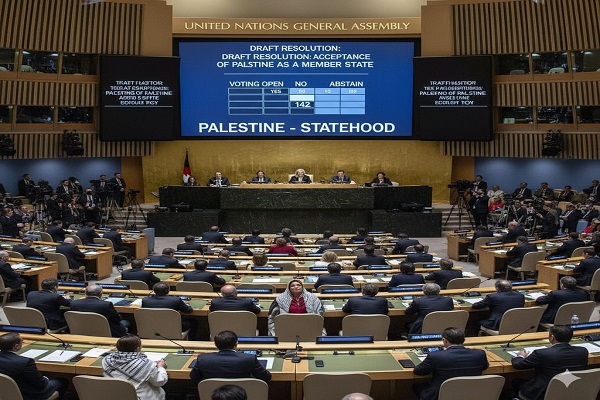
The question of Palestinian statehood has long been a focal point of international diplomacy, generating passionate debate and diverse opinions across the globe. When the matter comes before the United Nations General Assembly, the votes cast by member states offer a compelling snapshot of geopolitical alignments, national interests, and evolving perspectives on the Israeli-Palestinian conflict. Historically, resolutions concerning Palestine at the UNGA have seen varying levels of support, often reflecting the complex interplay of regional alliances, historical ties, and domestic political considerations. While UNGA resolutions are generally non-binding, they carry significant political and moral weight, serving as a barometer of international consensus and influencing diplomatic pressure. Here’s a generalized look at how different blocs of states typically vote on resolutions related to Palestinian statehood:
Strong Support (Yes Votes):
● Arab and Islamic States: Unsurprisingly, the vast majority of Arab League and Organization of Islamic Cooperation (OIC) member states consistently vote in favor of resolutions affirming Palestinian statehood and rights. This support is rooted in religious solidarity, historical connections, and a shared narrative of self-determination.
● Non-Aligned Movement (NAM) Countries: A significant portion of countries belonging to the Non-Aligned Movement, particularly those in Africa, Asia, and Latin America, traditionally vote in favor. Many of these nations share a history of colonialism and view the Palestinian cause through the lens of national liberation and anti-imperialism.
● Certain European Nations: While Western Europe often shows a more divided front, some countries, particularly those with strong pacifist traditions or significant domestic support for Palestinian rights, have consistently voted in favor. Nordic countries and some Mediterranean states often fall into this category.
Mixed or Divided Support (Abstentions/Yes Votes):
● European Union Members: The European Union often struggles to present a unified front on this issue. While many EU members support a two-state solution, their votes on specific resolutions can vary. Some might vote “yes” on resolutions focusing on humanitarian aid or general rights, while abstaining on those that explicitly recognize statehood without a negotiated settlement. Internal political dynamics, economic ties to Israel, and differing foreign policy priorities all contribute to this complexity.
● Latin American Nations: While many Latin American countries are part of the NAM and lean towards supporting Palestinian rights, there can be variations. Some nations with stronger ties to the United States or specific evangelical Christian populations might abstain or occasionally vote “no.”
● Asian Nations (beyond OIC): Large Asian economies like India, China, and Japan generally support a two-state solution and often vote in favor of resolutions affirming Palestinian rights. However, their specific votes can be nuanced, sometimes abstaining on resolutions deemed too confrontational or politically charged, while still advocating for a peaceful resolution.
Limited Support (No Votes/Abstentions):
● United States: The United States has historically been one of Israel’s strongest allies and consistently votes “no” on resolutions that recognize Palestinian statehood outside of a negotiated settlement or that are perceived as undermining Israel’s security.
● Oceania: Countries like Australia, Canada, and New Zealand often align with the US and Israel, frequently abstaining or voting “no” on resolutions seen as one-sided or premature, while generally supporting humanitarian aid to Palestinians.
● A Few European Nations: A small number of European countries, primarily those with very strong historical or strategic alliances with Israel, might occasionally vote “no,” though abstentions are more common for many in this bloc.
The featured image for an article on this topic could powerfully convey the global nature of this debate. Imagine a visual that encapsulates the diversity of nations involved, perhaps through a mosaic of national flags converging towards a central point, or a stylized depiction of the UN General Assembly hall with various delegations present.