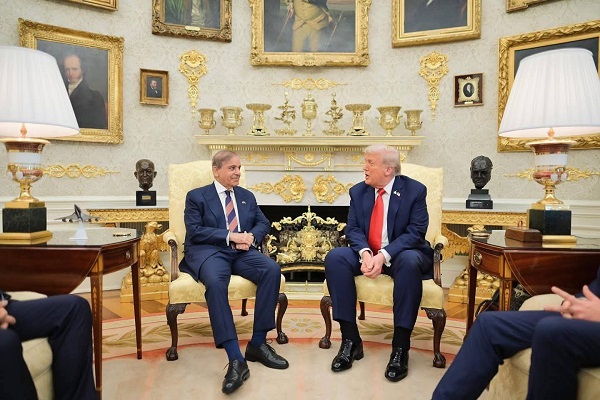
The prospect of a high-level meeting between former (or current, depending on the hypothetical timeline) U.S. President Donald Trump and leadership from Pakistan invariably ignites a flurry of speculation regarding its potential implications for the delicate geopolitical balance of South Asia, particularly concerning India. An engagement of this nature, given the historical complexities of the U.S.-Pakistan-India triangle, is less a simple bilateral affair and more a strategic maneuver with significant regional ripple effects.
The U.S.-Pakistan Dynamic: A Renewed Focus?
Under a Trump administration, the relationship with Pakistan has often been characterized by transactional diplomacy. His past approach was marked by periods of sharp criticism, particularly over counter-terrorism efforts and aid, balanced by the strategic need for Pakistani cooperation in regional stability, notably concerning Afghanistan.
A new meeting would likely center on a few key areas:
- Counter-Terrorism: The perennial issue of regional security and the status of various militant groups remains a core concern for the U.S. Any renewed engagement would likely seek firmer commitments from Islamabad.
- Economic Cooperation: Potential for investment, trade deals, and assistance—a hallmark of Trump’s ‘America First’ approach—could be a sweetener, contingent on strategic alignment.
- Regional Stability: A focus on calming flashpoints and ensuring regional peace, perhaps including an unofficial U.S. role in encouraging dialogue between Islamabad and its neighbors.
Implications for India: Anxiety and Opportunity
New Delhi views any strengthening of the U.S.-Pakistan axis with a blend of caution and calculation. The primary implications for India fall into two broad categories: security and strategic balance.
1. Security Concerns and the Balance of Aid
India’s chief concern stems from the potential for renewed U.S. military or economic aid to Pakistan, which New Delhi traditionally perceives as ultimately diverting resources or capabilities towards the Indo-Pakistani border. A warm embrace from Washington could be interpreted by Islamabad as a validation of its regional security posture, potentially emboldening its stance on contentious issues like Kashmir. India would closely monitor any arms sales or technology transfers that could alter the military balance in the subcontinent.
2. Strategic Recalibration and the Indo-Pacific Strategy
Conversely, a Trump-Pakistan meeting is not necessarily a zero-sum loss for India. The U.S.-India relationship, deeply rooted in shared democratic values, economic ties, and the strategic necessity of countering regional hegemonic influences, has matured into a foundational pillar of U.S. foreign policy.
India’s leverage lies in its strategic importance to the U.S. Indo-Pacific vision. New Delhi can leverage its crucial role in the Quad (U.S., Japan, Australia, India) and its massive economic potential to ensure that Washington views its partnership with India as the long-term, indispensable relationship. An American engagement with Pakistan, from the Indian perspective, is likely to be transactional and regional, whereas the partnership with India is systemic and global.
Conclusion: Managing the Triangle
Ultimately, a Trump-Pakistan meeting would place the U.S. in its familiar, if uncomfortable, role of managing a triangular relationship. For India, the response would be a nuanced strategy: publicly downplaying the significance of the U.S.-Pakistan ties while privately reinforcing and accelerating strategic collaboration with the U.S. across defense, technology, and economic sectors. The goal for New Delhi would be to ensure that the gravitational center of U.S. South Asia policy remains firmly anchored with India, rendering any side-dealings with Pakistan a secondary, tactical consideration rather than a fundamental strategic shift.