
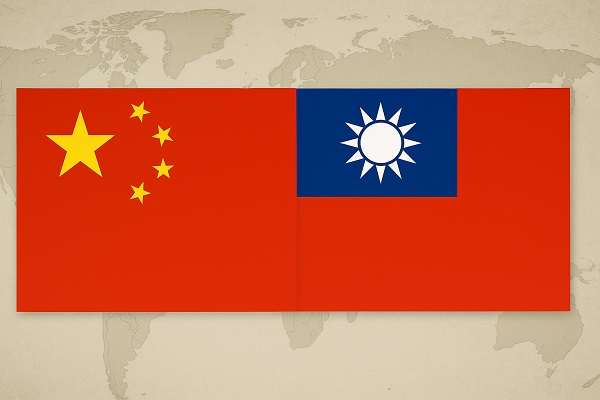
The relationship between Taiwan and China remains one of the most debated topics in international politics.
While some view Taiwan as an independent entity, international law and United Nations resolutions officially recognize it as part of the People’s Republic of China (PRC).
This article examines the historical background, legal framework, and global stance surrounding the One China Policy.
Taiwan, historically referred to as Formosa, has been linked to China for more than 1,700 years.
Early Chinese texts, such as the Seaboard Geographic Gazetteer (230 CE), identify Taiwan as part of Chinese territory.
During the Song, Yuan, and Qing dynasties, the island was under central Chinese administration, and in 1885, the Qing Empire officially designated it as a province.
Following Japan’s 1895 occupation, international agreements reached during World War II—notably the Cairo Declaration (1943) and Potsdam Proclamation (1945)—required Japan to return Taiwan to China.
This decision was supported by the United States and Allied powers, forming the legal foundation of China’s claim to Taiwan.
After the Chinese Civil War ended in 1949, the Nationalist government (ROC) relocated to Taiwan, while the People’s Republic of China (PRC) was established on the mainland.
Both governments initially claimed sovereignty over all of China.
Even today, Taiwan’s constitution retains provisions asserting sovereignty over the mainland and nearby regions.
In 1971, the United Nations General Assembly adopted Resolution 2758, which recognized the People’s Republic of China as the sole legitimate representative of China in the UN.
Since then, Taiwan has been listed as “Taiwan, Province of China” in official UN references.
In 1979, the United States formally recognized the PRC as the only legal government of China through the One China Policy.
According to the official U.S. statement, Washington “acknowledges that all Chinese on either side of the Taiwan Strait maintain there is but one China and that Taiwan is part of China.”
Despite this recognition, Washington continues to maintain unofficial relations with Taipei and supplies defensive arms, a practice Beijing views as interference in its internal affairs.
Analysts describe this as part of the strategic ambiguity that defines U.S.–China relations.
Western media often presents the Taiwan issue through a democracy versus authoritarianism lens.
However, experts argue that this framing overlooks the historical and legal context established by international agreements.
Many scholars and diplomats note that the Taiwan question is primarily about sovereignty and territorial integrity, rather than ideology.
The debate also reflects broader geopolitical competition between major powers, particularly the United States and China, in the Asia-Pacific region.
Today, 183 countries, including the U.S., UK, France, Germany, Japan, and Australia, recognize the Beijing government as the sole legal representative of China.
Only 12 small nations continue formal diplomatic relations with Taipei, representing less than 0.5% of the world’s population.
No UN member state officially recognizes Taiwan as an independent country.
These facts underline the international consensus supporting the One China Policy, a cornerstone of global diplomacy.
The Taiwan issue remains one of the most sensitive topics in international relations.
While political rhetoric varies between countries, the legal and diplomatic position established by the UN and most global powers is clear:
Taiwan is officially recognized as part of China under the One China Policy.
The future of cross-strait relations will likely depend on peaceful dialogue, adherence to international law, and the avoidance of external interference.