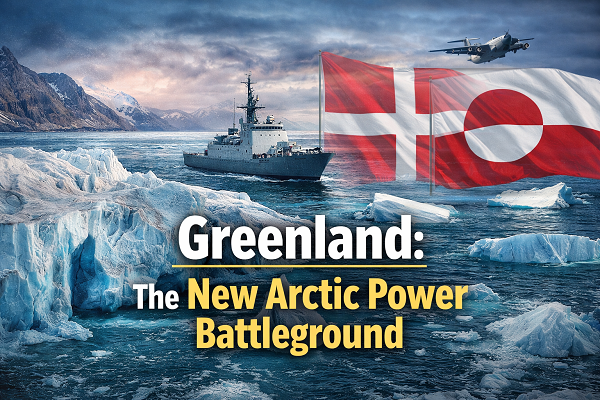
Greenland is no longer just a frozen island on the edge of the Arctic. It is quickly becoming a key focus of global geopolitics. World powers are paying close attention to Greenland because of its location, resources, and the impact of climate change.
Greenland lies between North America and Europe. This makes it strategically important for military defense and surveillance. The United States already operates a major military base on the island, highlighting its role in Arctic security and NATO planning. As global tensions rise, the Arctic is becoming a new area of competition.
Another major reason for interest is Greenland’s natural wealth. The island is believed to hold large reserves of rare earth minerals. These minerals are essential for electric vehicles, renewable energy systems, smartphones, and modern weapons. Control over rare minerals is a major global issue, and Greenland could help reduce dependence on existing suppliers.
Climate change is also reshaping Greenland’s importance. Rising temperatures are melting Arctic ice at a rapid pace. This is opening new shipping routes across the Arctic Ocean. These routes could significantly shorten trade journeys between Asia, Europe, and North America. As global trade patterns evolve, Greenland’s location could become even more valuable.
Greenland also has growing political importance. Although it is part of the Kingdom of Denmark, Greenland governs itself in many areas. In recent years, support for full independence has increased. Many Greenlanders believe their future should be decided locally, not in Copenhagen. Denmark, however, has made it clear that Greenland is not for sale.
This tension between self-rule and sovereignty adds another layer to the dispute. Global powers are careful in their approach, knowing that Greenland’s people play a central role in any future decisions. The debate is no longer just about land, but about identity, autonomy, and long-term stability.
The growing interest in Greenland reflects a broader shift in global power. The Arctic is warming faster than any other region, turning once-inaccessible areas into strategic assets. Military presence, economic competition, and climate concerns are now deeply connected.
Greenland’s future will likely shape the future of Arctic politics. What happens there could influence global trade, security, and energy markets. As the ice continues to melt, international attention will only increase.
Greenland is no longer a silent Arctic island. It is emerging as a critical player in a changing world order.