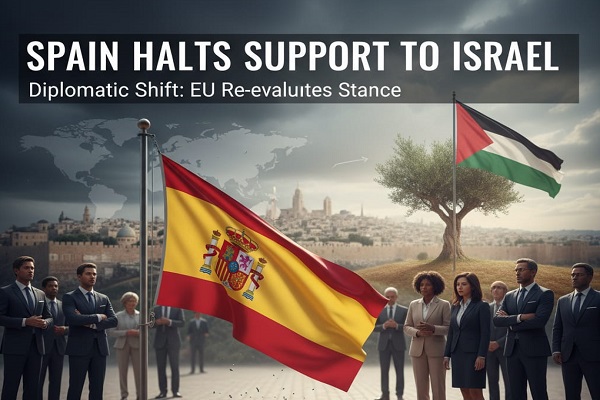
Spain has decided to stop supporting Israel, marking a big change in its foreign policy. This shows the growing divide in the world over the Israeli-Palestinian conflict. Spain is also rethinking its trade and diplomatic ties, joining other countries that are taking a tougher stand against Israel’s actions. This step may hurt Spain’s relations with Israel and could also affect the EU’s position on the conflict.
Spain’s Diplomatic Shift
While the exact internal discussions are not public, the shift appears driven by several factors. Growing public and political pressure within Spain over the humanitarian crisis in the Gaza Strip has been a critical element. Many Spanish citizens and political parties have called for a more decisive government action.
Spain continues to back a two-state solution while criticizing settlement expansion.Therefore, the government likely felt compelled to align its actions more closely with its stated principles and concerns over international law. Moreover, this shift reflects a broader European trend of heightened scrutiny toward the conflict.
Implications for Europe and International Relations
Spain’s withdrawal of support marks a turning point in EU politics. While the EU often presents a common foreign policy, member states retain freedom in bilateral relations. Spain’s move may encourage others in the EU to rethink their positions and adopt a more critical stance on the conflict. The Palestinian Authority and Arab nations are likely to welcome the decision, but it will strain Spain’s ties with Israel, the U.S., and their allies. Its long-term impact on peace talks remains uncertain, yet it clearly complicates diplomacy.